Dirty Car Air Vents? What You Need to Know
If you live in North Jersey and spend hours commuting through Morristown, Parsippany, or Dover traffic, your car’s air conditioning system might be circulating more than just cool air. That faint musty smell, the unexplained sneezing, or the headaches during long drives could be signs that mold and bacteria are building up inside your vents. Most drivers don’t think twice about their AC system until it starts affecting their health. Keep reading to learn what’s really going on inside your car’s AC system.
What’s Hiding Inside Your Car’s Air Vents?
Your car’s AC system creates condensation. Moisture builds up inside the evaporator core and ductwork. In humid New Jersey summers, that moisture lingers. Where there’s moisture, there’s opportunity for:
- Mold spores
- Bacteria
- Mildew
- Dust mites
- Pollen buildup
According to the U.S. Environmental Protection Agency (EPA), mold thrives in damp environments and can trigger respiratory symptoms in sensitive individuals. Your car’s dark, enclosed AC system is the perfect breeding ground. Moreover, every time you turn on the fan, you may be blowing those particles directly into your face.
Common Signs Your Car’s AC Is Contaminated
1. A Musty or Mildew Smell
This is the biggest red flag. If your AC smells like wet socks or a damp basement, mold growth is likely inside the evaporator or vents.
2. Increased Allergies While Driving
Sneezing, itchy eyes, congestion if these symptoms worsen in the car and improve when you exit the vehicle, your cabin air may be the trigger.
3. Weak Airflow from Vents
Dust and debris buildup can restrict airflow. That means your system is working harder yet still performing poorly.
4. Headaches or Irritation on Long Drives
Poor air quality in a confined cabin can cause fatigue and discomfort, especially on long commutes through Morris County.
How Do Germs Get Into Your Car’s AC System?
- Leaves and debris enter through exterior vents.
- Moisture from rain and humidity gets trapped.
- Cabin air filters clog and no longer filter properly.
- Pet hair and dust circulate and settle.
In areas like Denville or Rockaway, where fall leaves are constant, and summers are humid, buildup happens faster than most drivers realize. Using the recirculation mode continuously can trap contaminants inside the cabin for longer.
Health Risks of Mold in Car Air Vents
For many people, mild exposure causes only minor irritation. But for others, especially:
- Children
- Elderly passengers
- Asthma sufferers
- Allergy-prone individuals
It can trigger stronger respiratory symptoms.
The CDC notes that mold exposure can cause nasal stuffiness, throat irritation, coughing, or wheezing in sensitive individuals. In a small, enclosed vehicle cabin, concentration levels can feel amplified. If your child’s car seat smells musty, that’s not something to ignore.
Can DIY AC Cleaning Sprays Fix the Problem?
Usually not. Many store-bought AC bombs or vent sprays only mask odors. They don’t remove deep contamination inside the evaporator core or duct system. Some even leave behind chemical residue that mixes with existing mold.
If the contamination is light, replacing the cabin air filter and using a proper antimicrobial treatment may help. But when odor returns after a few days, that’s a sign the problem runs deeper. This is where professional interior detailing makes a difference.
Professional Vent Cleaning
At CAB Detailing NJ, we approach AC contamination as part of a complete interior system, not just a quick spray-and-go.
Here’s what proper treatment involves:
- Inspection of the cabin air filter
- Deep interior vacuuming (removes circulating debris)
- Targeted antimicrobial treatment inside vents
- Surface sanitization of high-touch areas
- Odor-neutralizing (not masking) process
Our Interior Ultimate Package is designed for situations exactly like this. We bring our own water and power, so whether you’re in Parsippany-Troy Hills or Randolph, we handle everything in your driveway.
How to Prevent Future Buildup
- Prevention matters just as much as cleaning. A few smart habits:
- Turn off the AC a few minutes before parking to let the vents dry.
- Replace cabin air filters regularly.
- Avoid leaving windows open during pollen-heavy days.
- Schedule routine interior detailing.
During peak summer humidity in Morris County, maintenance matters even more.
When to Book a Professional Cleaning
You should schedule service if:
- The smell returns repeatedly.
- Allergies worsen only inside your car.
- You’ve never had the vents professionally cleaned.
- Your vehicle is older than 3–5 years.
Ignoring the issue won’t make it disappear. Mold doesn’t resolve itself.
Breathe easier with CAB Detailing NJ. Your car should feel fresh, safe, and comfortable. CAB Detailing NJ provides professional mobile detailing throughout Morris County. Schedule a mobile interior detailing with us today. We bring water, power, and professional tools directly to your driveway to keep your car fresh, dry, and mold-free. Call 862-260-4178 or email info@cabdetailingnj.com to book your appointment.
FAQs
- Is mold in car air vents dangerous for children?
Children are often more sensitive to poor air quality than adults. Mold spores and bacteria can trigger coughing, congestion, or worsened asthma symptoms. Since car cabins are enclosed spaces, exposure can feel more concentrated.
- Why does my car AC smell like mildew or wet socks?
That musty smell usually means moisture has built up inside the evaporator core, creating an environment where mold and mildew grow. This is especially common in humid climates. The odor often gets stronger when you first turn on the AC.
- How do I clean mold out of my car’s air vents?
Light contamination can sometimes be improved by replacing the cabin air filter and using an automotive-safe antimicrobial treatment. However, deeper mold growth inside ductwork or the evaporator requires professional cleaning. A proper interior detailing service targets the system safely without damaging components.
- How often should car air vents be cleaned?
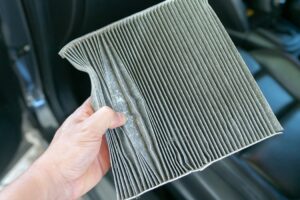
hand hold dirty car air conditioning filter
There’s no strict rule, but most vehicles benefit from inspection once a year. If you drive daily, park outdoors, or live in high-humidity areas like Morris County, buildup can happen faster. If you notice odors or allergy symptoms, don’t wait for a yearly schedule.
- Does replacing the cabin air filter remove bacteria and mold?
Replacing the cabin air filter helps reduce airborne debris, but it does not remove mold already growing inside the AC system. Think of it as improving airflow, not eliminating contamination. If the smell continues after replacing the filter, deeper cleaning is likely needed.
- Can professional detailing improve air quality inside my car?
Yes. A thorough interior detailing service removes dust, debris, and contaminants that circulate through the cabin. When combined with targeted vent treatment and odor neutralization, it significantly improves air freshness. Professional equipment and products reach areas that basic sprays cannot.