Safe Methods to Clean Bug Splatter from Your Car
If you drive regularly across North Jersey highways, you’ve probably noticed a layer of bug splatter and sticky tar coating your front bumper after every trip. It’s not just unsightly; these contaminants can etch into your clear coat, dull your paint, and make cleaning feel endless. Many drivers try harsh scrubbing or household cleaners, only to leave scratches behind. The good news is there’s a right way to handle it. This article highlights the best ways to help you remove bug splatter and tar from your car without damaging the paint.
Why Bugs and Tar Are Tough to Remove?
Bug splatter and road tar bond to your car in different ways. Bugs contain acidic proteins that bake into the paint under heat, while tar is petroleum-based and clings like glue. When left untreated, both can stain clear coat layers or cause permanent dulling.
In North Jersey’s hot, humid climate, this happens fast, even overnight. Regular washing alone is not enough. Proper removal takes technique and the right tools.
Step 1: Soften the Mess Before You Touch It
Never start scrubbing dry. First, rinse the car thoroughly to loosen surface dirt. Then spray the affected areas with a dedicated bug and tar remover or pre-wash foam. Let it sit for a minute or two so the enzymes or solvents can break down the residue. Avoid household cleaners like degreasers or dish soap. They strip wax and can dull your finish.
If you’re dealing with stubborn splatter from highway drives through Morris County or trips down the shore, a microfiber-safe product designed for automotive paint will make the job smoother and safer.
Step 2: Use the Right Tools for Gentle Removal
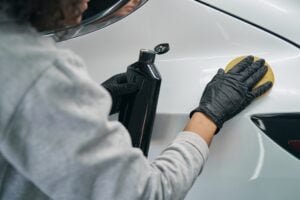
After the remover has softened the grime, use a soft microfiber towel or bug sponge to gently lift away the residue. Work in small sections and rinse your towel often to avoid re-grinding debris into the paint. For tar spots, an automotive tar remover or citrus-based cleaner works best. Apply with light pressure; never scrape with fingernails, credit cards, or abrasive pads.
Pro tip: if tar is stubborn, hold a damp microfiber soaked in the cleaner over the area for 30 seconds to dissolve it before wiping.
Step 3: Wash and Decontaminate the Surface
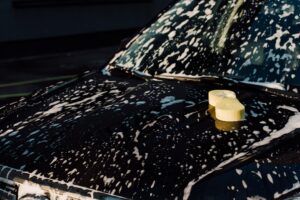
Once all visible residue is gone, perform a proper two-bucket hand wash using a pH-balanced car shampoo. This step ensures no cleaner residue remains and preps the paint for decontamination.
If the paint still feels rough, a clay bar or clay mitt will safely remove embedded contaminants. After claying, the surface should feel smooth like glass, ready for protection.
Step 4: Protect the Paint After Cleaning
Once the surface is clean and dry, apply a fresh coat of wax, sealant, or ceramic spray. This creates a slick barrier that makes it harder for bugs and tar to stick next time. In regions like North Jersey, where highway grit and pollen are constant, maintaining this layer is key to long-term protection.
Common Mistakes to Avoid
- Using paper towels or old rags that cause micro-scratches
- Scrubbing with pressure before softening contaminants
- Letting bug splatter sit for days in the sun
- Using strong solvents not meant for clear coat surfaces
- Forgetting to reapply wax or sealant afterward
These habits can cause swirl marks, oxidation, and paint fading issues that often cost far more to fix later.
When to Call the Pros
If you’re dealing with baked-on bug guts, thick tar buildup, or visible etching in the paint, professional help can save your finish. CAB Detailing NJ offers safe, mobile detailing services across Morris County and surrounding areas, using specialized products and techniques to remove contaminants without harming your paint.
Bugs, tar, and road film are a part of driving, but they don’t have to ruin your paint. Schedule mobile detailing with CAB Detailing NJ and restore that deep, glossy finish right at your driveway. Call us at 862-260-4178 to book your appointment today.