The brine trucks go out before the first real snow, usually a day or two ahead of it. By the time you notice the white streaks across Route 10, the salt has been on your car for days. That’s usually when people start thinking about winterizing, and by then the salt has had a head start.
Winterizing is two jobs
One of them is mechanical: battery, tires, fluids, wipers, lights. That’s a mechanic’s work, and nothing below replaces it.
The other is the car’s surfaces, and it decides whether you find rust starting under a rock chip come March. It’s the half that’s easy to put off, because a clean car doesn’t feel urgent in November, and because the damage doesn’t show until it’s expensive.
What a North Jersey winter does to a car
Paint. Salt and brine hold moisture against the surface instead of letting it dry. Anywhere the paint is already broken, a chip from a rock or a scratch along a door edge, that’s where corrosion gets started. Add the grit that comes with snow removal and the fine scratching from brushing snow off a dirty panel, and a car can finish the season looking dull even if it never got hit by anything.
The underside. This is where the worst of it happens, out of sight. Salt collects underneath the floor, on the brake lines, the fuel lines and the suspension, and it keeps working long after the roads are clear.
Wheels. Brake dust and salt combine into a layer that sticks hard, and it can pit the finish on alloy wheels if it sits there all winter.
The inside. Boots bring in salt and water, carpets stay damp, and the moisture doesn’t leave a closed car in January. Damp carpet is one of the usual sources of the stale smell by the end of winter, and it starts long before you notice it.
Morris County, NJ
Getting it done before the salt starts?
We come to your home or workplace with our own water and power, so the car gets cleaned and protected where it’s parked.
What to do before the first freeze
Five things, in this order: wash it, get the stuck-on grit off the paint, protect it, clean the underside, and deal with the interior. The order matters, because each step depends on the one before it.
- Wash it properly, including the wheels and the lower panels where salt will land first.
- Get the stuck-on grit off. If the surface feels rough when you run a hand over it, there’s grime stuck to the paint that washing won’t lift, and sealing over it locks it in. Detailers call this decontamination.
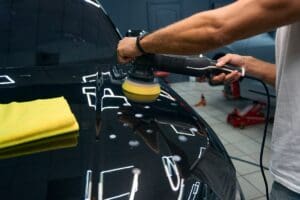
- Protect it. Wax or a sealant gives salt something to sit on besides your clear coat, and it makes each wash easier while it’s on there. An exterior detail covers the wash, the wheels and the sealant. Getting the stuck-on grit off is its own service, and it’s the step worth adding if the paint feels rough.
- Clean the underside before the season rather than after it, so salt lands on a clean surface. A drive-through rinse wets the underside, but it doesn’t clear what packs in around the suspension, which is what undercarriage cleaning and its high-pressure system are for.
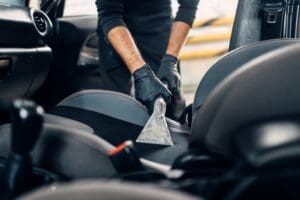
- Deal with the interior. Swap fabric mats for rubber ones you can lift out and hose off, and treat leather before it spends the winter dealing with dry air and salty boots.
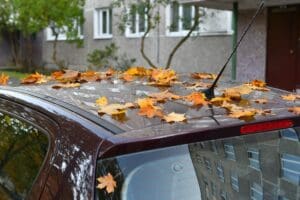
Clear the fall jobs first, if they’re still outstanding. Leaves pack into the vents at the base of the windshield, and tree sap sits on the roof. Sap gets harder to remove once it’s cold, and both are covered in our fall car care list.

When to do it
Before the roads are treated, not after the first snow. In North Jersey that means late October into November, because brining starts ahead of the forecast rather than after the storm. Do it in November and the first salt of the season lands on a protected surface instead of bare paint.
There’s a practical reason not to put it off. Once the temperature sits below freezing, a thorough wash gets a lot harder, and our guide to removing road salt and winter grime covers what you can and can’t do in a freezing driveway, along with the method for the rest of the season. Washing every two to three weeks keeps buildup down, and a rinse after a storm matters more than the calendar does.
Not sure what your car needs before the season starts? Call and tell us what it looks like now.
When winter ends, reset it
One full clean in spring, underside included, is what closes the winter out. By March there’s a winter of salt and grit still sitting on the car, most of it underneath, and spring is different from the pre-winter job in three ways:
- The salt has had months to settle, in the seams, behind the wheels and along the underside, so the underside matters more now than the paint does.
- Interior marks have set. Salt that dried into the carpet in December has had three months to set.
- Chips are worth finding now. Anything that opened up over the winter is better dealt with before summer, while it’s still only a chip.
Do it once in spring and the winter is closed out. Skip it and the salt stays underneath until next winter adds to it.
What to leave to a mechanic
The battery, the tires, the fluids, the wipers and the lights all go to a mechanic. None of that is detailing work, and nothing above replaces it. We don’t go near the mechanical side, and we shouldn’t. Those are safety items, and they matter more in January than any of this does.
FAQs
When should I do it?
Late October into November in North Jersey, before the roads get treated. Salt goes down ahead of the first storm, so waiting for snow means the car has already had days of it.
Is a detail before winter worth paying for?
Depends on how long you’re keeping the car. If it’s staying with you, yes: rust starts where you can’t see it, and bodywork is the expensive end of that. If you’re selling it in the spring, it probably isn’t worth it.
Can’t I just do the underside myself?
A rinse at home helps, and it’s better than nothing after a storm. What a home rinse can’t do is reach the places salt actually sits, which is underneath the floor and up around the suspension.
Does wax or a sealant actually help against salt?
It gives the salt a layer to sit on instead of your paint, and it makes removal easier while it lasts. How long that is depends on the product and the winter, so it’s worth a look mid-season. It isn’t armor, and you still have to wash the car.
What should I leave to a mechanic?
Anything mechanical or safety related: battery, tires, fluids, wipers, lights. This side of winterizing is paint, the underside, the wheels and the interior. The two jobs sit alongside each other, and one doesn’t substitute for the other.